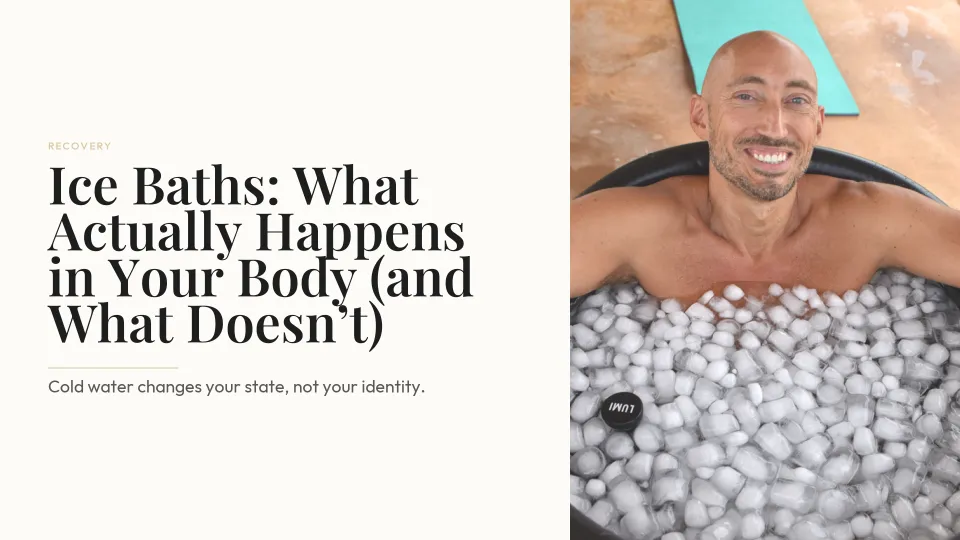
An ice bath is a short immersion in cold water, usually between about 5°C and 15°C (41°F to 59°F). People use it for alertness, mood, stress training, and recovery. It is a tool, not a personality, and it is not magic.
It can help busy professionals, athletes, parents, and high performers who want a reliable state change. It can also stress the heart and nervous system hard. If you have cardiovascular disease, uncontrolled blood pressure, or you are pregnant, get medical advice before you try it. If you feel unwell, skip the session.
What you will learn in this guide:
- What an ice bath actually is (and what it is not)
- Honest benefits, without hype
- How cold affects dopamine, norepinephrine, and focus
- What cold does (and does not do) for testosterone
- Temperature, time, and beginner dosing
- Timing before workouts and after endurance vs strength
- A cycle-aware note for women before menopause
- Safety, sauna-to-ice caution, and breathing in the tub
- A simple weekly routine, common mistakes, and a beginner checklist
- FAQ, plus books and quotes with a verify note
What Is an Ice Bath?
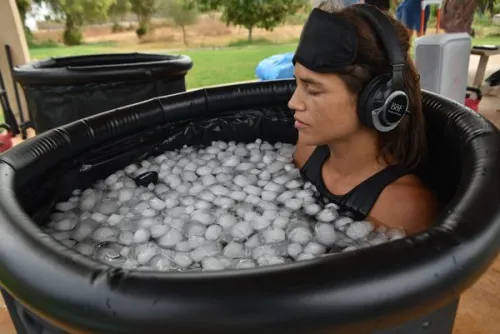
An ice bath (also called a cold plunge or cold-water immersion) means sitting or standing in cold water long enough to trigger a clear cold shock, then getting out and warming up. Homes often use a tub with ice or a chilled plunge. Facilities use controlled tanks. A cold shower is a useful cousin, not the same full-body hit. Lakes, seas, and winter rivers count too, with extra outdoor safety rules.
The core stimulus is cold stress. Your body responds with vasoconstriction, a sharp rise in alertness chemicals, faster breathing, and a strong urge to leave. That uncomfortable spike is the point. Hormesis is the idea: a short, controlled stress can leave you more capable afterward, if the dose is right and recovery is real.
Think of three layers of cold practice. Layer one is a cold finish on a normal shower. Layer two is a dedicated tub or plunge at a known temperature. Layer three is open water. Most people get excellent returns from layers one and two. You do not need a viral ocean clip to join the practice.
What an ice bath is not:
- A fat-loss miracle
- A substitute for sleep, food, training, or relationships
- Proof that you are tougher than everyone else
- Safe for everyone, every day, at every intensity
At One Body Now we treat cold as part of Breathe: nervous system training that sits next to Move and Eat. One action now. Then back to your day.
Ice Bath Benefits (Honest)
The honest list is shorter than social media, and more useful.
Alertness and focus. Cold water raises norepinephrine (noradrenaline), a chemical tied to attention and arousal. Many people feel clearer within minutes. That short-term lift is one of the most reliable effects.
Mood and state change. After the first shock settles, a lot of people feel more awake, more confident, and less foggy. Long-term antidepressant claims are still being studied. Treat the quick state shift as the clear win. Treat mood as a possible bonus, not a guarantee.
Stress training. Each plunge is a short rep for your stress response. You practice staying with discomfort without panicking. Reviews have reported lower measurable stress later in the day after cold exposure. That does not mean cold erases chronic stress. It means you get practice at recovering from a spike.
Recovery (with timing). Cold constricts blood vessels, then blood flow returns as you warm. That can ease sore muscles and help endurance athletes feel ready sooner. If your goal is muscle growth from strength training, deep cold right after lifting can blunt some of the adaptation signal. More on timing below.
Inflammation and soreness (careful claim). People often say cold “reduces inflammation.” In practice, what you notice is less next-day stiffness and an easier time walking downstairs. That can matter during a heavy work week or a race block. It is still not a license to ignore injuries or train through sharp pain.
Resilience and mindset. There is no trick in the tub. Only you, choosing to stay for a short, planned time. That small choice, repeated, is rehearsal for harder things later. Parents use it before a noisy evening. Founders use it before a hard call. Athletes use it between sessions. Same tool, different life.
What the evidence does not support as a headline claim: melting fat on its own, fixing hormones overnight, curing disease, or replacing medical care. Be suspicious of any post that stacks ten miracles onto one plunge.
Cold works best when it is one lever inside a real lifestyle: movement, food, breath, and sleep. At One Body Now that stack is the point. Cold without the rest is a spice with no meal.
Dopamine, Norepinephrine, and the Brain
Cold exposure is famous online for “dopamine.” The nuance matters.
Norepinephrine rises quickly in cold water. That rise tracks with alertness, focus, and the “I am awake now” feeling. Research discussed in lifestyle medicine and cold-exposure literature suggests this response can stay strong even with repeated practice. You do not have to chase colder water forever to feel the wake-up.
Dopamine also rises with cold stress in some protocols, and people often feel motivation and mood improve afterward. Popular summaries (including talks associated with Andrew Huberman and others) sometimes quote large percentage increases. Treat those numbers as directional and protocol-specific, not as a promise that your Tuesday plunge will rewire your brain permanently.
Practical takeaways:
- Use cold when you need a clean state change (morning focus, post-travel fog, mental reset).
- Do not use cold to mask burnout. If you are exhausted, sleep and food come first.
- Keep sessions short enough that you leave feeling sharper, not depleted.
- Pair the plunge with steady breathing so the brain learns “I can stay calm under load.”
- Prefer morning or daytime cold if evening sessions make you too wired to sleep.
Cold is a stimulant with a recovery arc. Respect both halves. The goal is not to collect suffering. The goal is a nervous system that can spike and then settle on purpose.
Ice Baths and Testosterone (Men)
This section needs honesty, because cold is often sold as a testosterone booster.
Short cold exposure can create temporary shifts in the hormonal and nervous systems. That is not the same as raising baseline testosterone in a meaningful, lasting way for most men. If your T is low, cold plunges will not replace sleep, resistance training, body composition work, medical evaluation, or addressing alcohol and stress.
What cold can support for men:
- Better morning alertness (which can improve training quality)
- A sense of agency and follow-through
- Recovery tools around endurance or high training volume (when timed well)
What cold should not be sold as:
- A natural TRT alternative
- A fix for low libido by itself
- A reason to ignore bloodwork when symptoms suggest a real issue
If performance, mood, and recovery feel off for weeks, talk to a clinician. Use cold as a habit that supports a strong life, not as a hormone hack.
Best Temperature and Time
Dose beats drama.
Temperature
Level Water (approx.) Who it fits
| Soft start | 12°C to 15°C (54°F to 59°F) | Beginners, returners, cold showers progressing to tubs
| Standard training | 8°C to 12°C (46°F to 54°F) | Most healthy adults with practice
| Advanced | 5°C to 8°C (41°F to 46°F) | Experienced users only, short times
Colder is not automatically better. Colder plus longer plus panic is how people get into trouble.
Time
- First sessions: 30 to 90 seconds is enough.
- Building phase: 1 to 3 minutes, a few times per week.
- Experienced: often 2 to 5 minutes, still with a clear exit plan.
A useful rule from cold-exposure educators (including Huberman-style guidance many people follow): accumulate roughly 11 minutes per week of intentional cold, split across sessions, in water cold enough that you want to get out but can stay calm. That is a guideline, not a law. Smaller doses still count if they are consistent.
Exit criteria that beat the stopwatch:
- You can keep slow nasal breathing
- Hands and feet are cold but you are not numb and clumsy
- You feel challenged, not panicked
- You can warm up afterward by moving and drying, without forcing a scalding shower immediately every time
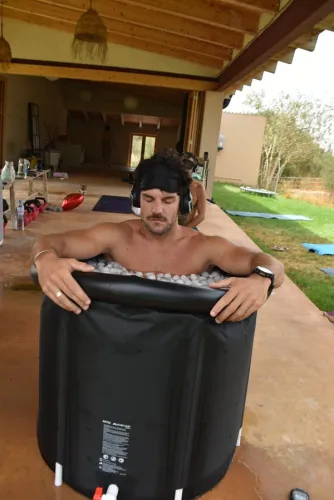
If you are using bags of ice in a home tub, stir the water so the temperature is even. Measure once you can. Guessing leads people to brag about temperatures they did not actually hit, or to stay too long in water colder than they planned.
Before a Workout
A short cold hit before training can raise alertness and perceived readiness. Keep it brief if you lift or do skill work afterward, because very cold muscles and joints do not love maximal force right away.
Simple approach:
- 30 to 90 seconds of cold (or a cold shower finish)
- Dry off, light movement, mobility
- Then train
Skip a deep, long plunge immediately before heavy squats, sprinting, or technical Olympic lifts. You want nerves awake and tissues ready, not stiff.
For a desk-heavy morning, a short cold finish after a warm shower can be a better “on switch” than a third coffee.
After Training (Endurance vs Strength)
Timing depends on the goal of the session you just finished.
Endurance and high-volume work
After long runs, rides, team sports, or brutal conditioning, cold can help you feel less sore and more recovered for the next session. Many endurance athletes use cold for that reason. Keep the dose moderate. Then eat protein and carbs, and sleep.
Strength and hypertrophy
If the session was about building muscle, avoid jumping into a long, very cold plunge in the first hours after lifting. Research (including work such as Roberts et al., Journal of Physiology, 2015) suggests cold-water immersion right after resistance training can reduce some hypertrophic signaling and long-term strength or size gains compared with active recovery.
Practical rule:
- Muscle-building day: wait several hours, or save deep cold for a rest day / next morning.
- Tournament, two-a-days, or “I need to feel human tomorrow”: cold after is reasonable.
- Mixed athletes: match cold to the priority of that block of training.
Cold is a recovery tool. Recovery tools should serve the adaptation you want, not fight it.
For Women Before Menopause (Cycle-Aware)
Cold is not a women-only topic, and it is not off-limits for women. A cycle-aware note simply helps premenopausal women dose smarter.
Across a menstrual cycle, stress tolerance, sleep, and body temperature can shift. Some women feel great with cold in the follicular phase and early cycle days. Others feel wiped if they push hard cold during late luteal days when sleep is lighter and stress feels louder. There is individual variation. Track your own response for a month or two.
Gentle guidelines:
- Start milder (warmer water, shorter time) if you are new, postpartum (after medical clearance), or returning from illness.
- On high-fatigue or poor-sleep days, choose a cool shower finish instead of a hero plunge.
- During menstruation, comfort rules. Some feel relief from inflammation-like soreness with brief cold. Others prefer warmth. Neither choice is a moral failure.
- If you have Raynaud’s, significant thyroid issues, or disordered eating history, get advice before aggressive cold protocols.
Example, kept brief: Sophie, a product manager and recreational runner, started with 45 seconds at about 14°C twice a week. She kept those sessions on lower-stress cycle days first, then expanded. The win was consistency, not suffering.
Menopause and postmenopause are different hormonal contexts again. The same safety rules apply: start easy, watch sleep and mood, and use cold as support, not punishment.
Safety: Who Should Avoid / Get Advice
Cold shock is real. In the first seconds, heart rate and blood pressure can surge, breathing becomes gasp-like, and panic can override judgment.
Get medical advice first if you have (or suspect):
- Heart disease, arrhythmias, prior heart attack or stroke
- Uncontrolled hypertension
- Serious respiratory disease
- Pregnancy (usually avoid intentional ice baths unless a clinician clears a specific plan)
- Cold urticaria or severe vascular disease
- History of fainting with cold or breath practices
Head immersion caution. Submerging the face and head adds the dive reflex on top of cold shock. For some people that combination is poorly tolerated and may raise risk around heart rhythm issues. Beginners should keep the head out. Advanced users who immerse the head should already be comfortable with body-only plunges, have a safe setup, and never do it alone.
Never:
- Plunge alone in open water or deep tanks if you are new
- Combine aggressive hyperventilation with underwater swimming (classic blackout risk)
- Stay in to “win” against numbness, confusion, or violent shivering that will not settle
- Use alcohol before cold exposure
Aftercare: dry off, add layers, move lightly (walk, easy mobility), hydrate, and let the body rewarm. A warm (not scalding) shower is fine if you are struggling. Over time, many people rewarm more with movement and clothes so the cold stimulus “counts” longer. Comfort and safety still win.
Environment checklist: non-slip floor, clear path out of the tub, phone within reach if you train alone at home, and no kids or pets who can tip the setup. Outdoor plunges need a buddy, known exit points, and respect for currents and weather.
This article is education, not medical care. When unsure, ask a clinician who knows your history.
Sauna to Ice Bath
Contrast therapy (heat then cold) feels amazing and is popular in spas and gyms. It is also a bigger cardiovascular swing.
Heat dilates blood vessels and raises heart rate. Sudden cold then clamps vessels down. Healthy people often tolerate that well in moderate doses. People with heart disease, blood pressure issues, or poor heat/cold tolerance should be careful or skip the hard contrast.
Safer contrast approach:
- Sauna round at a temperature you already tolerate
- Cool down a minute outside the sauna (sit, breathe)
- Short cold plunge or cold shower (start 30 to 60 seconds)
- Rewarm gradually
- Stop if you feel dizzy, chest pressure, or unusual palpitations
You do not need contrast to get benefits from cold. Cold alone is enough. Contrast is optional seasoning, not the main meal.
How to Breathe in an Ice Bath
Breath is the steering wheel.
Before you enter: take a few slow breaths through the nose. Set a time intention (“90 seconds”). Decide that the first 20 seconds will feel loud, and that is expected.
As you enter: expect a gasp reflex. Do not fight it by holding your breath in panic. Let the first exhale be long and controlled through the nose or gently through pursed lips. Then return to slow nasal breathing if you can.
While you stay:
- Longer exhales calm the system
- Soften the jaw and shoulders
- Keep eyes open and attention on counting breaths or seconds
- If panic rises, shorten the goal and exit cleanly. A clean early exit beats a messy overtime.
Avoid: stacked forceful hyperventilation right before a plunge if it makes you lightheaded, and any breath-hold games underwater.
Wim Hof style breathing has a place as a separate practice for some people, with its own safety rules. It is not required for a basic ice bath. For most One Body Now readers, quiet nasal breathing in the tub is the skill to master first.
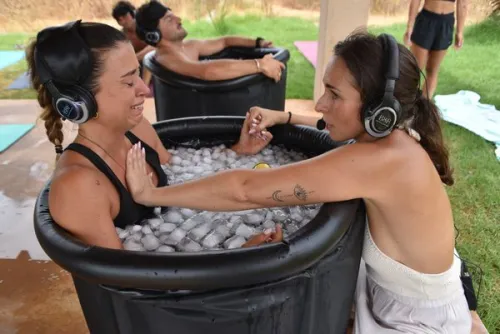
Building a Routine (Fat Loss Honesty + Weekly Sample)
Fat loss honesty
Cold can increase energy expenditure a little while you shiver and rewarm, and it can activate brown fat pathways in some contexts. That does not make ice baths a fat-loss program. Body composition still comes from food pattern, muscle-building movement, sleep, and consistency. Use cold for state and recovery. Use Eat and Move for fat loss.
A simple weekly sample (healthy beginner to intermediate)
A simple weekly sample (healthy beginner to intermediate)
Day Cold plan Notes
Mon | 60 to 90 sec after morning shower | Focus day starter
Tue | Off or cool shower finish only | Strength day: skip deep post-lift cold
Wed | 2 min plunge or long cold shower | Midweek reset
Thu | Off | Sleep priority
Fri | 60 to 120 sec | Optional before a hard work block
Sat | 2 to 3 min (if feeling good) | Endurance recovery day OK after long session
Sun | Off or very easy cool rinse | Rest
Weekly cold total might land around 5 to 11 minutes. Progress by consistency first, then slightly colder or slightly longer, not both at once.
How often? 2 to 4 intentional sessions per week is plenty for most people. Daily micro-doses (30 to 60 seconds) can work if sleep and mood stay good. If you get wired at night, move cold earlier in the day.
Travel version: hotel shower, last 45 seconds cold, same breathing rules. No tub required. The habit is the temperature gradient and your attention, not the Instagram set.
If you miss a week, restart at the last easy dose. Do not “make up” cold with a punishment session. That pattern turns a useful tool into another stressor you will eventually avoid.
Expert Tips / Common Mistakes
Tips that hold up:
- Start warmer and shorter than your ego wants.
- Use a timer you can see.
- Exit on plan, then celebrate the follow-through.
- Train cold on days you already sleep and eat reasonably.
- Keep a towel, warm layer, and non-slip setup ready before you enter.
- Track how you feel 2 hours later and the next morning. That feedback is better than stranger protocols on the internet.
Common mistakes:
- Going too cold, too long, too soon
- Plunging right after hypertrophy training every time
- Using cold to punish yourself after “bad” eating
- Head dunks and breath tricks on day one
- Comparing your 90 seconds to someone else’s winter ocean video
- Ignoring dizziness, chest pain, or lingering deep fatigue
- Treating cold as the whole lifestyle instead of one tool beside Move, Eat, and Breathe
Cold should leave you more available for your life. If it leaves you wrecked, the dose is wrong.
Beginner Checklist
Use this the first week.
- Cleared personal risk flags (or asked a clinician)
- Setup ready: tub or shower, thermometer if possible, timer, towel, warm layer
- Water around 12°C to 15°C (or coldest shower setting as a start)
- Plan: 30 to 90 seconds, head out
- Entry breath plan: long exhale, then slow nose breathing
- Exit on the timer even if you “could do more”
- Dry, move, rewarm
- Note energy and mood afterward
- Repeat 2 to 3 times this week before changing dose
- Share the plan with someone if you use a deep plunge tank
First win: show up and finish the plan. Second win: repeat it.
Conclusion
An ice bath is a short, deliberate cold stress. Done well, it can sharpen focus, train stress recovery, support certain kinds of athletic recovery, and build quiet confidence. Done poorly, it is unnecessary risk.
Keep the science honest. Keep the dose humble. Match timing to your training goals. Stay cycle-aware if that helps you. Breathe. Get out on time. Then live your day.
If you want a simple next step beyond this article, take the One Body Score at onebodynow.comand see where Move, Eat, and Breathe stand for you right now. Cold works better when the rest of the system is not guessing.
Move. Eat. Breathe. One action now.
Explore more in the One Body Now journal.
FAQ
How cold should an ice bath be?
Most beginners do well around 12°C to 15°C. With practice, 8°C to 12°C is a common training zone. Colder than about 5°C to 8°C is advanced territory and should stay short.
How long should I stay in?
Start with 30 to 90 seconds. Build toward 1 to 3 minutes as tolerance and recovery allow. More time is not automatically more benefit.
How often should I take ice baths?
Two to four intentional sessions per week is enough for most people. Some prefer daily short doses. Protect sleep and mood either way.
Are ice baths good for fat loss?
Not as a primary strategy. Any calorie bump from cold is small compared with nutrition and training. Use cold for state and recovery.
Should I ice bath after lifting weights?
If hypertrophy or max strength is the goal, avoid long cold immersion right after lifting. Wait hours or use rest-day cold. After endurance sessions, cold is more useful.
Can ice baths raise testosterone?
Do not count on them as a testosterone booster. Lifestyle and medical factors drive baseline T far more than plunges.
Is a cold shower enough?
Yes as a start, and yes as a sustainable habit. A full immersion is a stronger stimulus, not a moral upgrade.
Is it safe to put my head under?
Not for beginners. Face and head immersion adds dive-reflex stress. Master body-only plunges first, and never practice risky head immersion alone.
Can I go from sauna straight to ice?
Healthy people often do, in short doses. It is a bigger cardiovascular swing. If you have heart or blood pressure concerns, get advice or skip hard contrast. A brief cool-down between heat and cold is wiser.
Who should avoid ice baths?
People with significant heart disease, uncontrolled hypertension, pregnancy (unless cleared), severe vascular issues, or anyone who feels unwell. When unsure, ask a clinician.
What if I panic in the water?
Exhale longer, shorten the session, and get out calmly. Panic on day one is common. Reduce temperature challenge next time. Build skill, do not force heroics.
Do women benefit differently?
Benefits overlap with men (focus, stress training, recovery). Premenopausal women may want to adjust dose across the cycle based on sleep and energy. That is nuance, not exclusion.
Books worth reading
- Wim Hof: The Wim Hof Method (cold, breath, mindset; follow safety notes)
- Scott Carney: What Doesn't Kill Us
- Outside / endurance recovery texts and sports science reviews on cold-water immersion (for timing after training)
- Practical breathwork primers you already trust inside the One Body Now ecosystem (pair cold with calm breathing, not bravado)
Cold is old human technology in a modern tub. Use it with respect, curiosity, and a plan.
One Body Now · onebodynow.com· Move. Eat. Breathe. One action now.